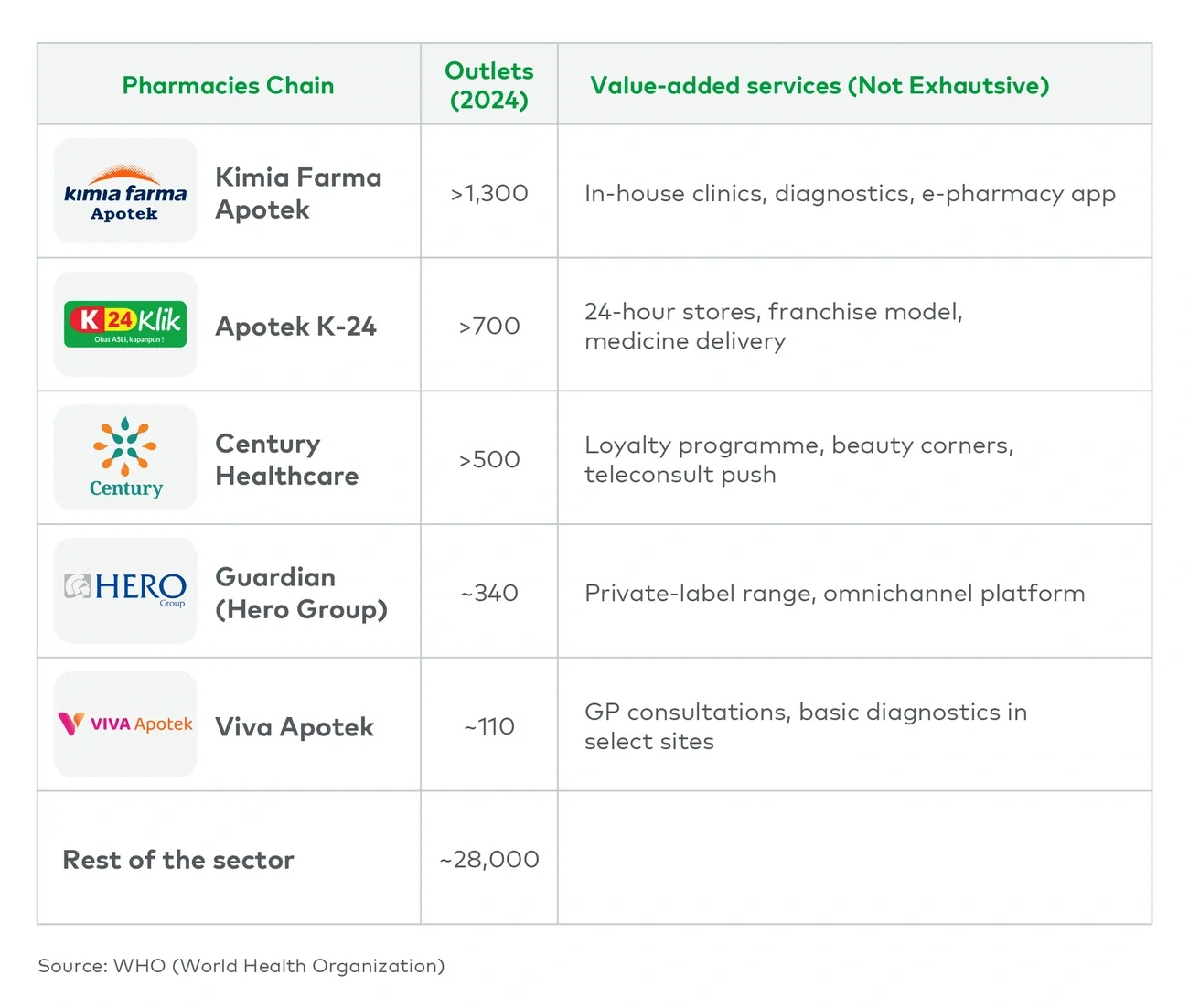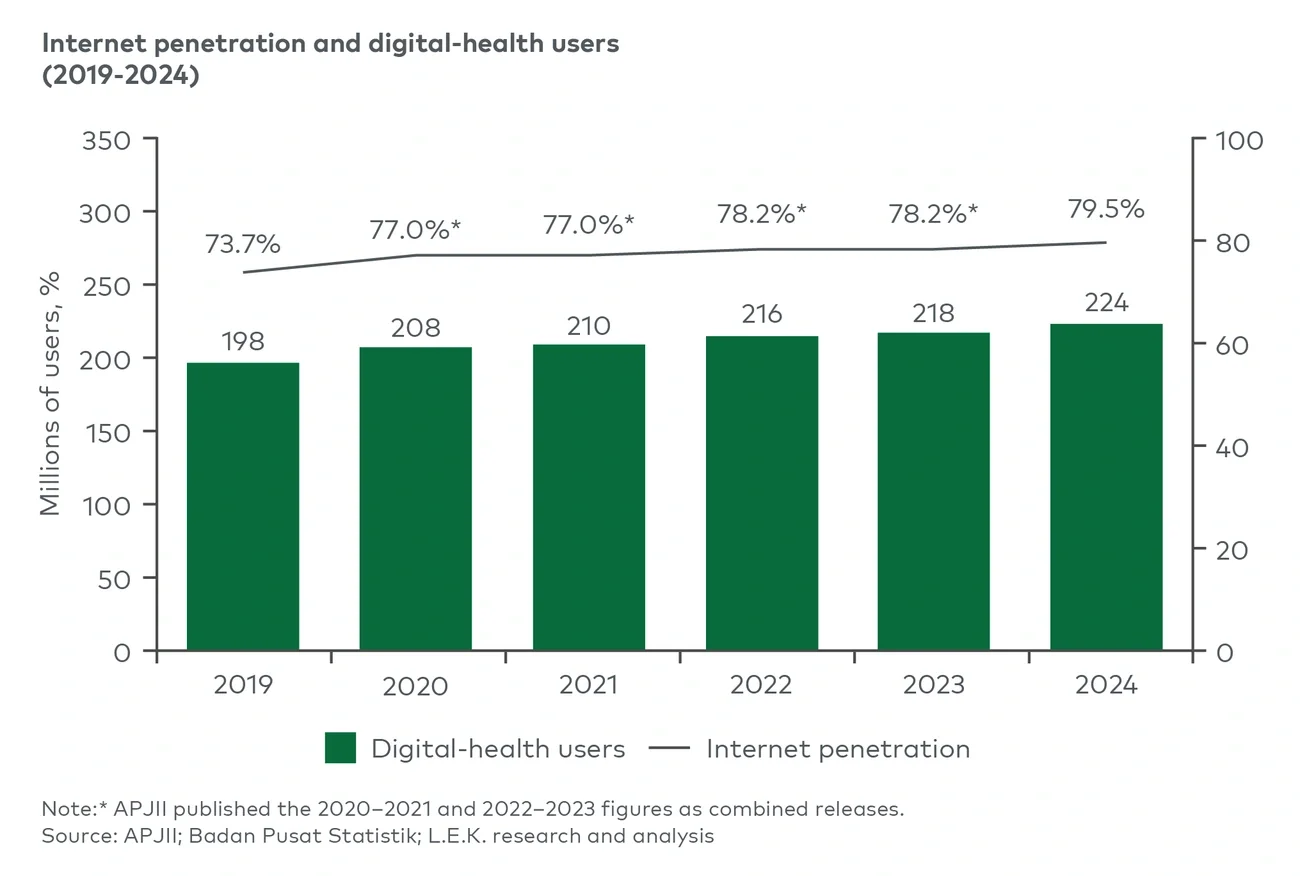

Indonesia’s retail pharmacy sector represents an interesting and still largely untapped opportunity within the country’s healthcare system. Despite a population of more than 280 million people, the market is highly fragmented, with modern chains accounting for only a small share of outlets. At the same time, broader insurance coverage, a growing middle class and rapid digital adoption are reshaping how Indonesians seek medicines and healthcare services. Together, these factors are laying the groundwork for consolidation, professionalization and innovation — creating space for investors and operators to add real value while supporting the evolution of a more accessible and resilient healthcare channel.
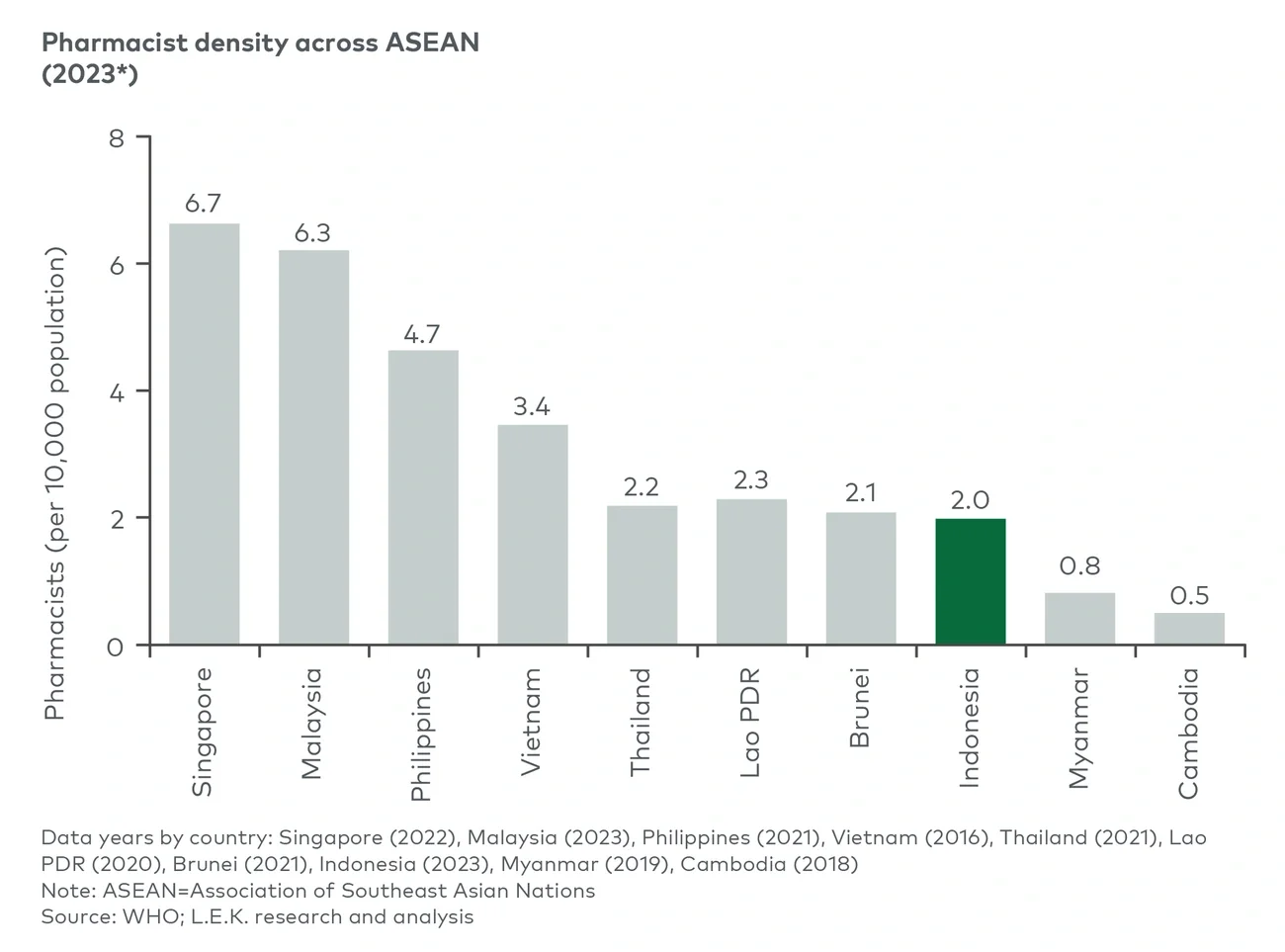
Indonesia’s pharmacy sector cannot be understood in isolation — it is deeply linked to broader structural challenges in the country’s healthcare system. At only about 170,000 doctors (six per 10,000 people) as of 2023, physician density remains approximately 60% below the global average, underscoring a nationwide shortage of medical professionals (see Figure 1). Accessibility is another major hurdle: nearly half of the population lives in rural areas, yet only roughly 5% of health facilities are located there, creating significant gaps in coverage. Affordability compounds these issues, with out-of-pocket spending still accounting for a large portion of healthcare costs. Against this backdrop, with many Indonesians unable to access even basic healthcare services, pharmacies have emerged as a crucial first line of care, bridging affordability and access gaps in ways hospitals and clinics often cannot.